
Note: if you want to use SpeedGrader to assess students’ annotations, you’ll want to create a Hypothesis Assignment rather than a Module item.
Creating a Hypothesis Module Item
- Navigate to the Modules page of your course site.
- Click the “+” button next to a Module to add a new Module Item

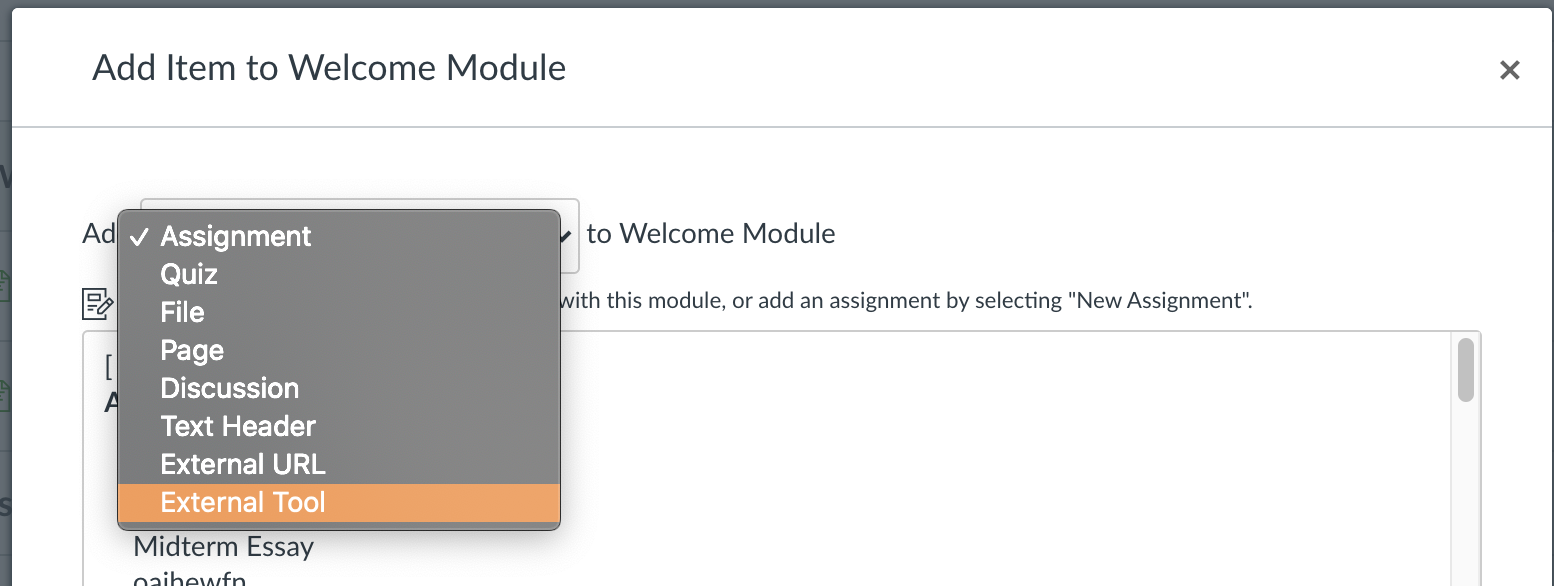
- Select External Tool from the drop-down menu at the top of the Add Module Item screen
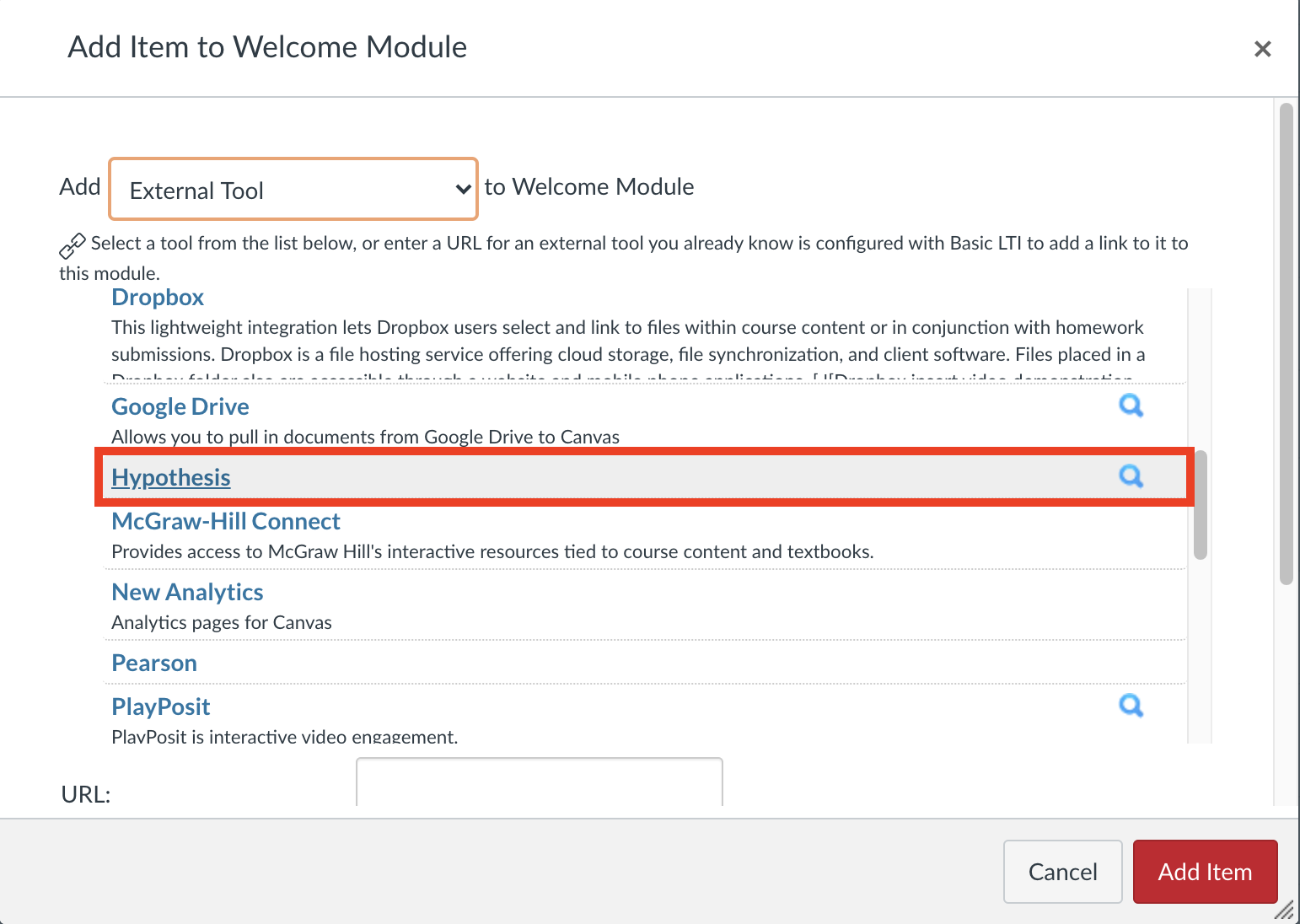
- Select Hypothesis from the list of available tools
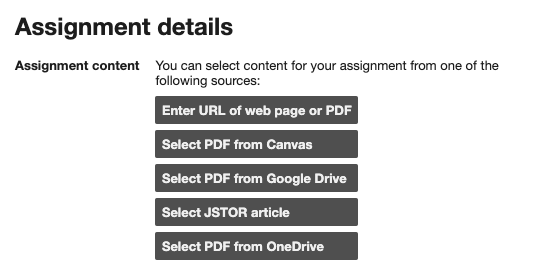
- On the next screen, you will be able to create a Hypothesis-enabled reading by linking to a publicly-viewable page or document, choosing a file from Google Drive, or selecting a file from your Canvas file repository. The screen will look like the one below:
- Using a URL of a web page or publicly available PDF: On the “Link Resource from External Tool” screen, paste a link in the text box. Please note that the content at the link must be publicly viewable (i.e., not behind a login or paywall). Here we’ve chosen a Wikipedia article, but you can link to blog posts, open-access books, journal and news articles, HTML pages, etc.
- Using a PDF from Canvas: Note: You must upload PDFs to your Canvas file repository before completing the steps below. The Canvas File Picker does not allow for uploading new documents.
You will see a list of files that have been uploaded to your Canvas file repository. Click on the title of the file you wish to use and click Submit. - Using a PDF from Google Drive: Note: This process will change the privacy of the selected Google Drive file to “Anyone with the link can view,” creating a publicly-viewable URL for the document. However, the document URL will not be shared with anyone outside your course and cannot be easily discovered.
On the Link Resource from External Tool screen, click Use Google Picker. You will be asked to authorize a Google account, and then you’ll be able to search for and select a file, or upload a new one. Click on the file you want to use and then click Select. - Using a JSTOR Article: You can link to an article from CSUCI’s JSTOR page using a JSTOR Stable URL. For detailed instructions about how to use JSTOR articles with Hypothesis, check out our Using Hypothesis with JSTOR guide.
- Using a PDF from OneDrive: Note: This process will change the sharing permission of the selected OneDrive file to allow the PDF to be shown to anyone viewing the assignment.
You will be asked to select a Microsoft account and/or authorize the Hypothesis LMS App to access OneDrive. Once logged on, browse to select a PDF to use in your reading. You may also select the Upload option to upload a new PDF to use. Only files available in “My files” are able to be used by Hypothesis. You will be unable to use PDFs that belong in any Shared Libraries.
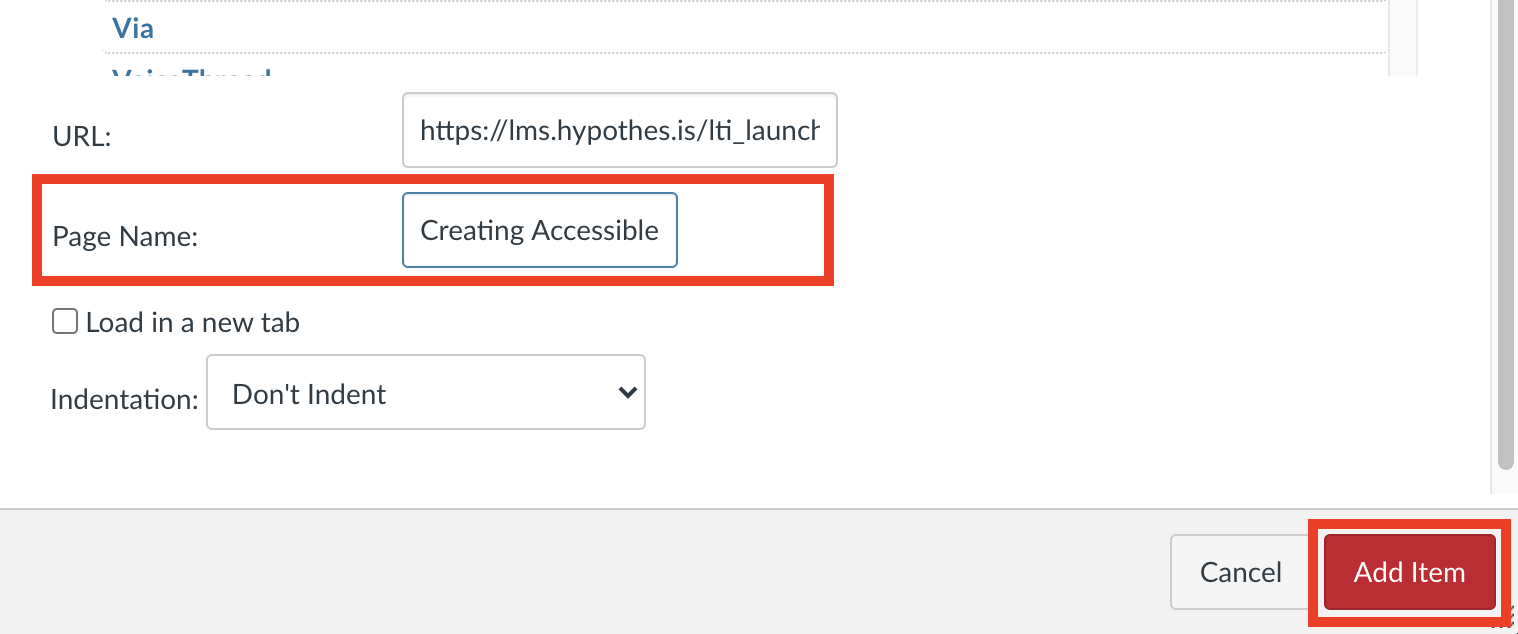
- Use the Page Name text box to give your Module Item a title that makes sense (e.g. the name of the resource they’re annotating), then click Add Item
- You will see your Hypothesis-enabled Module Item listed on the Modules page. When your students click on the Module item, the web page or document will open with Hypothesis enabled
- Students can start annotating right away with no need to join a group, log into Hypothesis, or switch the group scope selector.
Resources for How to Annotate
You can find info about how to annotate with Hypothesis on the Hypothesis support site, linked below. Skip over the parts referring to activating a browser extension as these apply to using Hypothesis outside of an LMS such as CI Learn/Canvas. The annotation tools, however, work the same within Canvas.
